
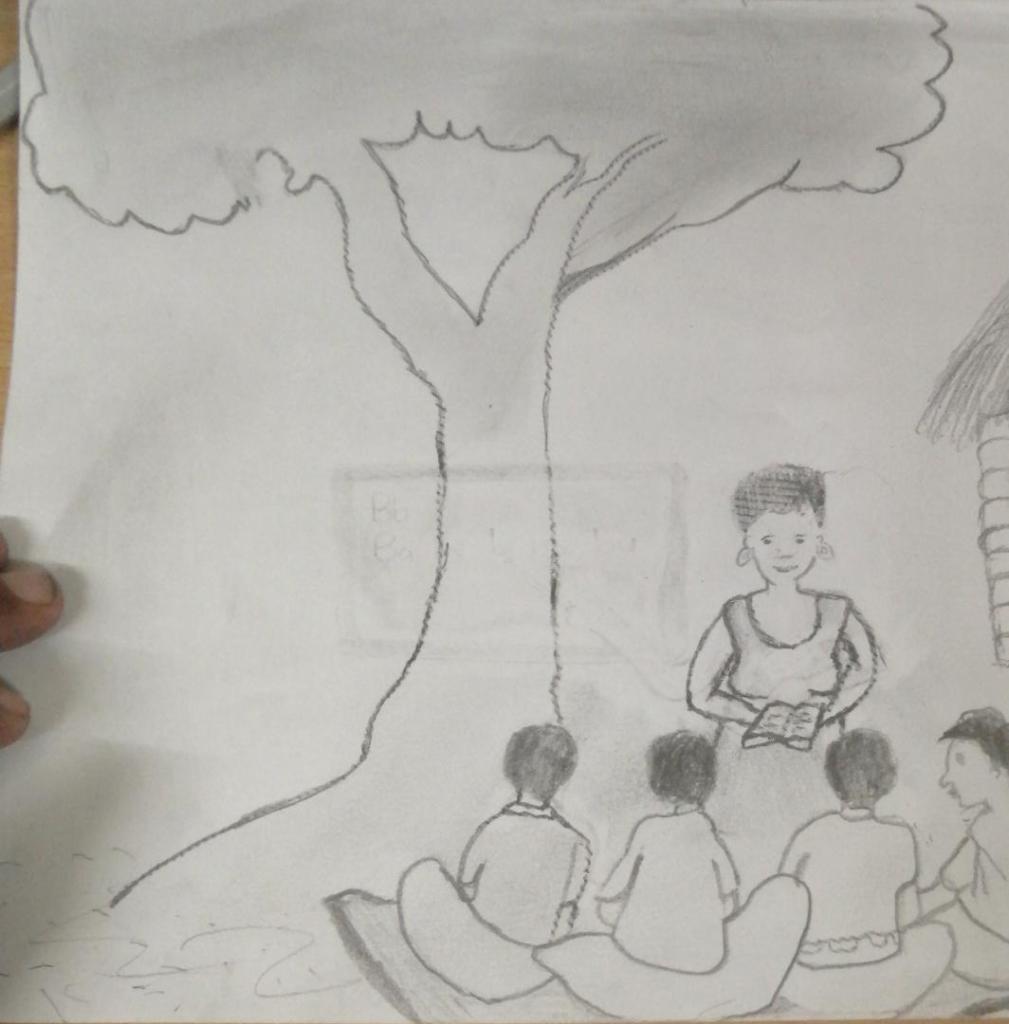
This is the third of my musings on the musical journey of my time and how I experienced it. Ours was a Christian family and we would sing and pray at night before we went to bed. My elder siblings constituted themselves into a choir and they would practice on and on and then ask for a slot during the next Sunday service where they would sing to some cheers from the congregation. Other families also did the same and to me it looked like a competition where our choir was always the best. We did Sunday school until around Grade 4 when we would graduate to Catechism. Ours was the Dutch Reformed Church (DRC) which later became Reformed Church in Zimbabwe (RCZ). Every family sent children to the school of their denomination. So, we had neighbours who were Catholic and they sent their children to the school of the same denomination. The nearest DRC school called Muzogwi was more that 5km away from our village but this is where we were supposed to go. By the time I started my primary school, my father compromised and sent me to the Seventh Day Adventist (SDA) School that was just a kilometre from our home. Church was integral to early learning and I would hazard to say a good 50% of what we were learning at Gwitima SDA School was the bible. We did a lot of religious verse and of course singing. So, I would spend the whole week being SDA and on Sunday I go to a DRC Sunday school. There was something very special about our Sunday school. The teacher an, old lady who must have been already in her late 70s called me sekuru or loosely translated uncle. She had a relationship she claimed with all of us but there was special treatment for sekuru. She would even try to explain why I was her uncle but I think I only appreciated her desire to be close to me years later when she would visit home and tell us stories. VaSara was her name. This means she was Sarah but for her age we prefixed her name with Va as an honorific. She did not have children and was not married so we could only use her maiden name. We used to start the Sunday school with the song:
Boka ravanana vaShe
Rinogara Zvakanaka
Kune Shiri Mudendere
Nenyenyedzi bva kudenga
VaSara would always claim her sekuru was so good at singing and then would say, “This is my sekuru, Sipambi. My great grandmother came from Charumbira. She is the one who filled this village with children. Everyone you see around this area as long as he or she is Shumba muMhari, they came from VaCharu, his Great Aunt”. I was indifferent to it but somehow it also encouraged me to live up to my great aunt’s reputation.
As boys grow up in the rural areas they graduate from herding goats to cattle. This is the time the elder boys used to make musical instruments for us and teach us how to use them. The instruments I remember include the reed penny whistle, pemba, makeshift banjos from one rubber string to six at most. These were never properly made but they produced the right sounds for the purpose. We would also sing ourselves hoarse as we herded the cattle home in the evening. One of the easiest songs I learnt to play on the banjo was:
Zambia
Ndikakwira pamuoro petireni
Zambia
Ndondoona Zambia

Meaning, If I ride on top of the train I will end up in Zambia.
The lines would be repeated continuously but it sounded great. The pemba had sounds such as:
Ndinogara moja tererini ndoitenga
Kariba dam
Ndoinda Bechuanaland
Chidhanana chinonaka
Chiri mudovi
These were just random words put in to fit a penny whistle song from South Africa.
Improvisation to make music was quite varied. We also crafted toys from matamba fruit shells called chihoriri. A string was put through two holes and by handling both sides one could rotate it by pulling it gently. It would rotate at high speed both clockwise and anti-clockwise making a gently purring sound while we sang along:

Chihoriri changu mbuya hwe
Chakatenga badza chikarima
Mandizvidza wakarumwa nengwe
Achinyanya kutevera jinga
Jinga rake rikamurumisa
Hondeya Chatigudubu
This music and entertainment accompanied us while we herded cattle the whole day. Sometimes we would get carried away until the cattle strayed into someone’s crop field. The immediate punishment was some lashing from the owner of the field. If the destruction was very bad, the owner would demand compensation form our family. Extreme cases were taken to the village headman or even the chief with very dire consequences for the offending family in terms of the fine. We tried by all means to avoid this but there were too many entertaining things that took our attention away for tending to the animals. We would sometimes enjoy swimming in Tugwane river while we sing and forget completely about the cattle. It would be a nice day when we go home with all the animals accounted for.
Immediately we reached home we would play some soccer while there is still light, and then have our supper. After supper sometimes elders entertained us with bed time stories (ngano) until we slept. We also did riddles (zvirambwe) amongst ourselves. Sometimes we chose to play house (mahubwe) in a mixed group of boys and girls. House games were accompanied by singing songs such as:
Maringa ringa ndaani
Ndaachdzudzura banga
Ndazomuwana muchakunye
Mucheche unendoro pamusoro
Chiya chindori
Pamutsihwa tsinyura
These went some of the rhymes of our time! Occasionally older people would correct us as we get carried away and messed up some of the songs. There were songs to accompany every activity. We had beautiful lullabies. Older children were given the task of looking after babies while their mothers worked. Some mothers would work with their children on the back and sing along to lull the baby. Popular lullabies included:
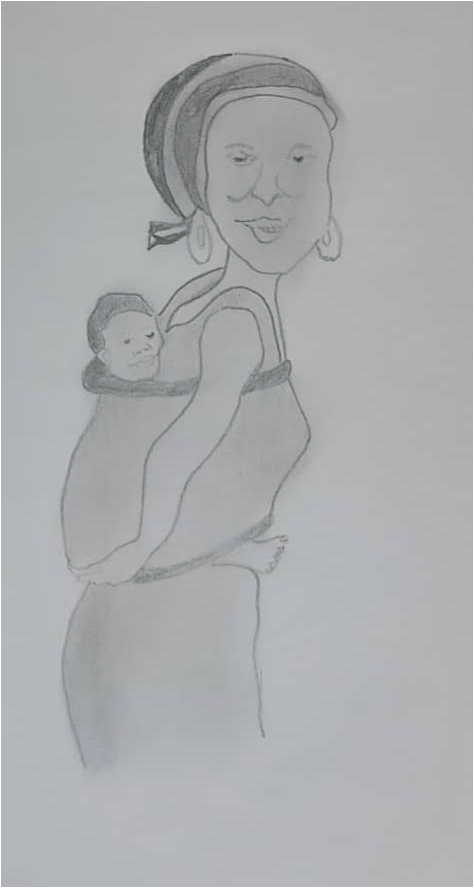
Eeh huh u weee
Uchawira mugomba
Mwana wenyu wariria vakoma
Achirira Mai vakainda
Vakainda Gurumatendera
Matendera kwaChidyamupunga
Chidyamupunga mhiri kwaRungezi
KwaRungezi kune banga jena
Banga jena rokucheka nyama
Nyama kwayo ndeya paruware
Yapasi inozara mavhu
Heino njiva huu
Inogurukuta huu
Nomwana muzasi huu
Kamwe kari kumba huu
Kanokanga zviyo huu
Zviyo zvavatete huu
Shanga yangu yawa huu
Yagonungwa nani huu
NaMushayadende huui
Wagoiisepi huu
Kugwizi rukuru huu
Kunodyiwa shavhi nenhengetenge
Chamupidigpori maridzangoma
Huku inomongo muchidodoma
Kwiyo go koo!
Your baby is crying my sister
Crying for its mother
Who went to Gurumatendera
Gurumatendera in Chidyamupunga (rice eater)
Chidyamupunga across Rungezi river
In Rungezi where there is the white knife
White knife to cut meat
Good meat the one on a rock
The one on soil is dirty
Here comes a dove
Cooing and dancing
With chick under its wings
The other chick is at home
Roasting millet
Millet for the aunt
My millet grain has dropped
Who picked it?
It’s Mushayadende
Where did he put
In the big river
Where we eat shavhi and ngengeteke fruits
While summersaulting
As we play the drums
A hen with marrow in the heel
Goes kwiyoo go koo!

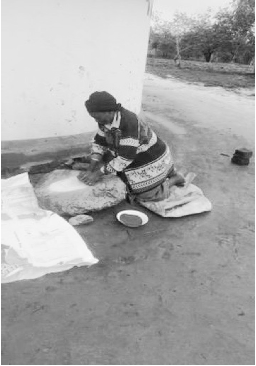
Food processing was a very arduous affair. There was the mortar (duri) and pestle (musi) pounding to de-husk, that was done by women; then the grinding on a stone. Each activity was almost always accompanied by song. I remember two very strong girls pounding millet in one mortar trying to out-compete each other in terms of who would get tired first and stop. They would be singing:
Wadzingwa warovegwa Mai
Navana vokwa Muzumani
This meant the loser’s mother has been beaten up by the neighbouring village’s children. It was intensely competitive and the song got the work done in no time. The grinding songs were varied. It was usually done very early in the morning and a signing woman could disturb your sleep as early as 0400hours while grinding millet.
Of course, as alluded to earlier, winnowing songs, dzokupura, were so popular and they could be sung even when there is no humwe yokupura. Songs that come to mind are:

Maruwana
Nyatsakufamba chinun’una
Ini ndichambozorora
Ndakainda mhiri kwaMungezi
Ndikandoona vanyandure
Ishe ndauya naye
Ndauya ndamuchingamiddza
These recollections significantly put almost permanent tunes in my mind. I can still vividly see what I am writing now with lots of nostalgia. Life was relatively less demanding although most of the things we did were manual; sometimes collectively and other times by oneself.
No generational values are stupid, they are only different. We cannot foist our time on other generations’ time. In our time, very few parents approved the playing of a banjo. If they did, they would limit the time that children could play banjo. It was particularly so for those of us who were going to school. The parents saw the banjo as an unnecessary distraction and a manifestation of lack of seriousness in life. They were aware of the obsession-inducing qualities of music. Some parents went to the extent of destroying them on sight. I have always heard musicians talking of how they succeeded in music because they had to hide their guitar playing habits from their parents. Some are perennially bitter that they were once looked down upon because of being musicians. I am very clear of what the parents meant. When I grew up, education was more rewarding for an African in my country and far less risky career-wise than arts. Parents wish the best for their children and they always want to be seen to have guided them. Some of the guidance is through enforcement. I see nothing wrong with that. All I see is goodwill. However, if music ends up paying for certain individuals, they cannot maintain bitterness against those who thought it would not when the available information then said it was riskier. There is no proving anyone wrong here. It is just a learning curve for all of us. The evolving school curricula have now incorporated more arts and sports to tap into the wider spectrum of talents among children.
I am of the opinion that education is complimentary to any talent; and I mean academic education. It helps in understanding the wider world, its history, its geography, philosophical reasoning such as mathematics, scientific explanations and applications and many other aspects that are relevant to enhancing artistic and sporting talents. I felt very let down when one of my favourite musicians snubbed me during a show. I approached him during break and called him by first name (as DJs do) and asked for a song. He looked aside and started another conversation. I thought he did not hear me, so I wrote my message on a piece of paper and gave it to a band member who handed it to him as they approached the stage. I was nearby to reinforce my request as he read it and asked who had sent it. I drew nearer and instead of assuring me that he was going to play the song I requested, he lectured me about how I should not address him by first name. He went further to say I should not look down upon him because whatever my work or education he had achieved much more through music than me. I did not know whether to apologise or protest. I did not know where that negativity came from. All my excitement died and I told my friends what had happened and they could not understand how this musician they knew I admired so much could think I looked down upon him. It was sore but I felt for him and later in his life when I listened to some of his recordings, it was clear that he had not gotten over the early life derision he endured as he followed a musical rather than an academic career. It was quite revealing to me.
The purpose of this digression giving my perspective is to emphasise that despite my early romance with music and my early recognition of arts as a possible career, I seem to have been better at academics than arts. So, my parents encouraged me in the academic direction. I appreciate it very much. This is partly why I did not achieve any prowess in playing instruments. The other reason is that despite my enthusiasm, I was not talented enough to achieve prowess in playing instruments. I am more of a vocalist than anything else.
 PJMUFARA
Wow! Powerful, you remember all this detail including the songs. This is amazing
LikeLike
Powerful. You remember all the fine details including the songs. Amazing!
LikeLike