
Hela naVaChivhaivhai
Fistfighting was always a part of the closely-knit society I grew up in, the Chivi District of Masvingo Province, Zimbabwe.
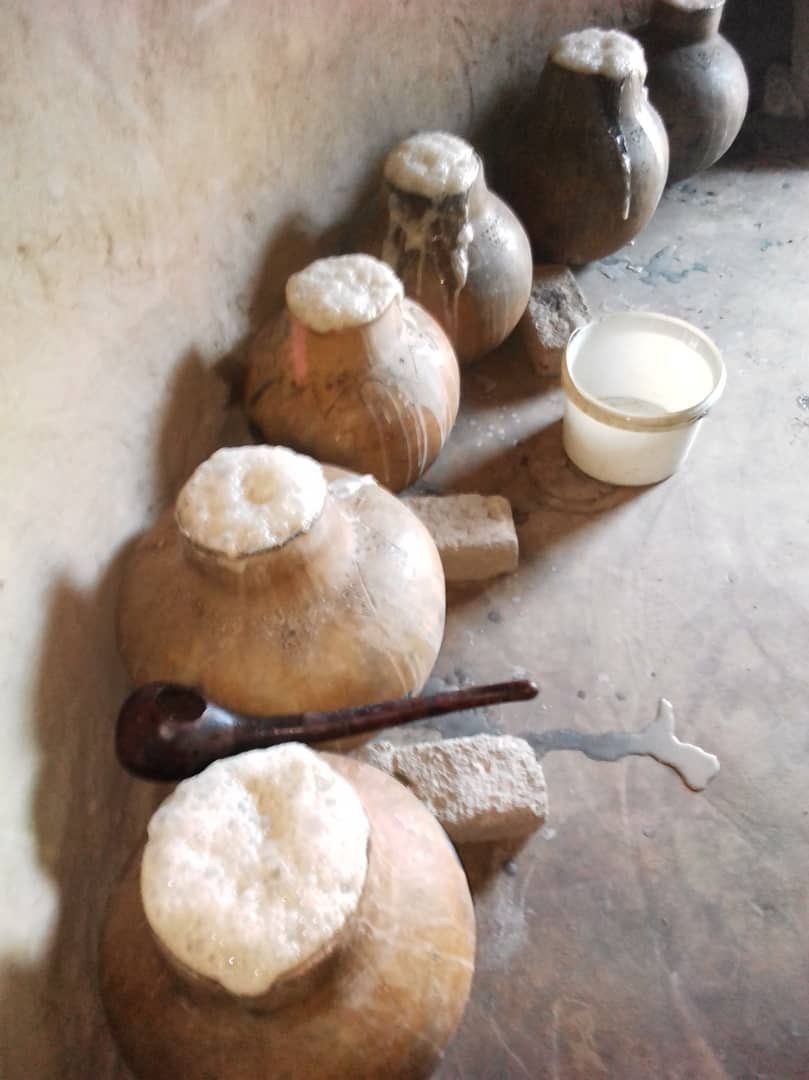
On a typical day, our community was cohesive, respectful, and hierarchical. However, fistfights were an unfortunate yet predictable outcome of excessive drinking of home-brewed beer. On working days, villagers would often drink beer during a humwe, a working feast where one villager invites others to help with fieldwork while providing them with food and drinks, including home-brewed beer, which we refer to as doro. The work could involve ploughing fields (ramageja), weeding (rokushakura), or crop thrashing (rokupura). The prefixes ‘ra-/ro-‘ in these terms are derived from the root syllable referring to beer.
Other occasions for drinking typically occurred on non-working days, such as ndhari, where beer was sold, and Bira or ReChiKaranga, a traditional feast held to honour ancestors. It was during ndhari and humwe that fights were likely to break out. In contrast, bira was usually a festive and respectful event, led by clan elders who conducted intercessions with ancestors amid song and dance.
Initially, humwe feast would be quite orderly, focusing on completing the tasks at hand. The work began early in the morning, with most tasks accomplished before mid-morning, when participants were offered small amounts of beer known as chikurura mabhachi (taking off jackets or heavy clothing).
After this initial break, there would be another session of hard work, which would culminate in a generous lunch featuring meat from a freshly slaughtered animal. The largest serving of beer, called gombora, was served after lunch, during a time when people rested in the shade of trees. Each invited village received a nyengero (a large clay pot) of beer to share. Beer could also be distributed based on age group: majaya(young men), magera (middle-aged individuals), vakuru (elders), and madzimai (women). Each group would choose a mucheri (the sharer) to ensure fair distribution among drinkers. Grudges often emerged in these moments if some imbibers felt the distribution was unfair.
Those who overindulged during gombora could end up too intoxicated to return to complete the day’s work. Nevertheless, most villagers were committed to finishing the tasks to the satisfaction of the host of the humwe. Leaders and ushers would guide the work process. Once the tasks were complete, the final round of drinking, known as chisaino (signing off or conclusion), was served. This was not meant to last long, and only a small amount of beer was offered. However, by this time, many people would be drunk, which often led to unreasonable arguments and subsequent fights. Disagreements could arise from sharing a homemade cigarette stub, unresolved grudges from previous encounters, or even as simple as a display of strength. It was almost expected that one or two fights would conclude a day’s worth of beer-drinking. While deep-seated grudges were rare, inconclusive encounters typically prompted more fights until one person conceded defeat.
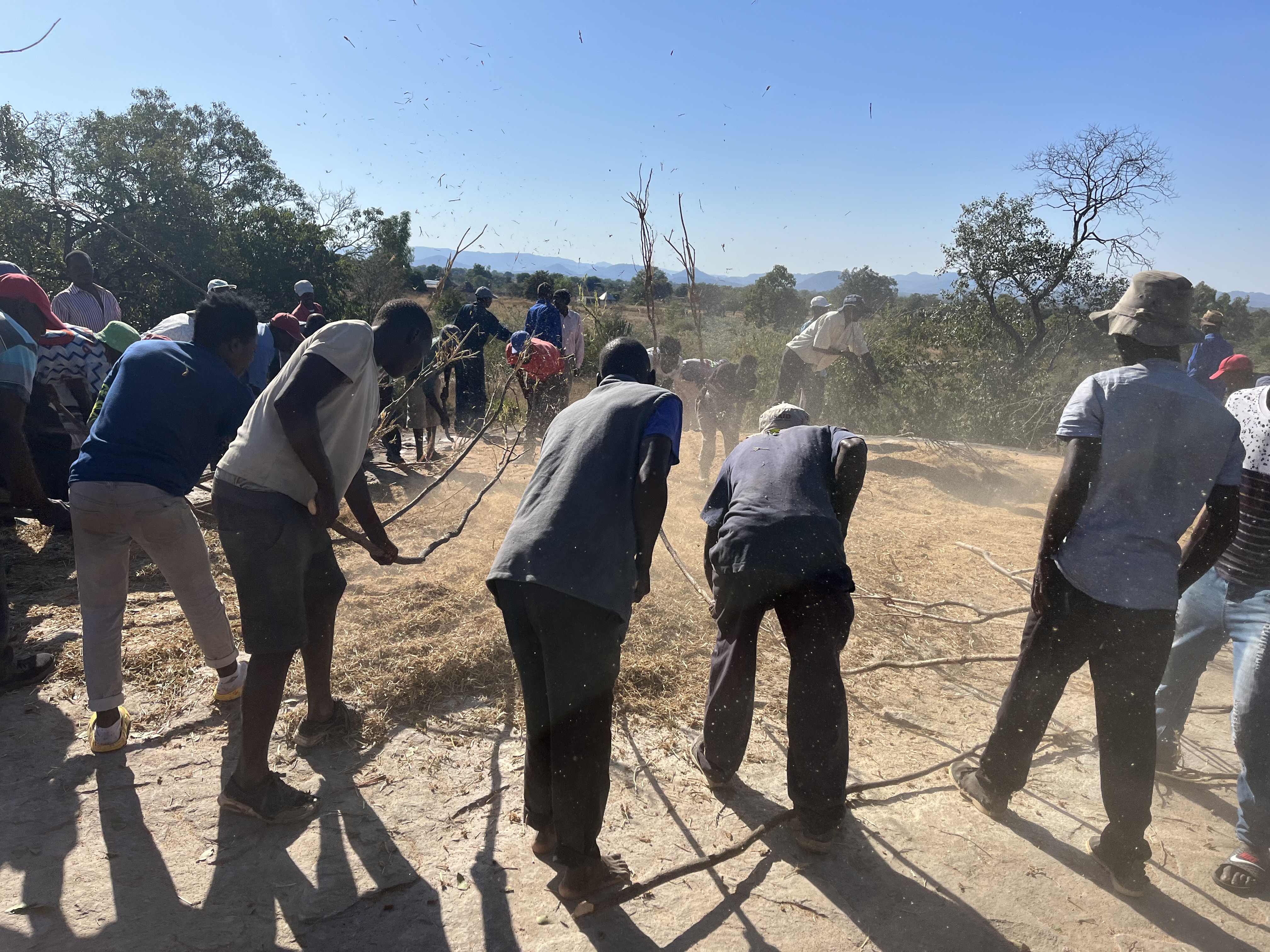
The frequency of fistfights during and after chisaino became so common that when the District Commissioner attempted to put an end to the problem, he ordered the sabhukus (village leaders) to change the order of events so that chisaino occurred first, followed by chikurura. This directive made no sense, as the same beer (mupeta) was served throughout the day.
A notable story about fistfighting involves my uncle Hela and SekuruVaChivhaivhai, which ultimately ended up in Chief Zvakavapano Masunda’s court. Ba’munini Hela became a legendary figure at beer feasts after he was declared a prohibited immigrant in Gweru, ostensibly due to his thieving tendencies. Commonly known as “P.I.” (prohibited immigrant), this term referred to Africans banned from residing in or visiting urban areas during the Rhodesian colonial era. This ban was enacted under vagrancy laws designed to keep unwanted individuals out of the largely European-dominated urban spaces. The Vagrancy Act, promulgated in 1960, was intended to control and rehabilitate individuals deemed vagrants, but it was deeply punitive and mainly targeted marginalized African populations. Many people in our rural area, including Ba’munini Hela, were victims of this law, and it became a source of pride for some, as they boasted about being si impossible to the white people that they were unwanted even near the Salisbury-Beit Bridge highway that passed close to our villages.
Sekuru Kwangware Sirivoyi, also known as VaChivhaivhai, was a respected elder in our community, though he had his peculiarities when drunk. A diligent farmer, his firstborn was older than Ba’munini Hela by several years. Elders in our society disliked being labeled as ‘old’ or ‘finished,’ as such labels were not just frowned upon but also seen as an invitation for them to prove otherwise. Sekuru VaChivhaivhai, uncomfortable with the notoriety that Hela was gaining among his peers, felt compelled to demonstrate that Hela was merely a child, lacking true fighting skills.
While Hela, whose real name was Vunganayi Mudzimbabsekwa, was not a frequent fighter, he was fit and often accepted invitations for a fistfight. His nickname “Hela” came from his impressive skills as a soccer goalkeeper, eliciting cheers of “hellaaah!” from supporters each time he blocked a shot. Unfortunately, his talent was wasted as he found himself trailing after villages for home-brewed beer binges since the police had confined him to the area.
During one such drinking session, Sekuru Chivhaivhai left his drinking companions and approached a group of young men drinking nearby. He had a singular purpose: to prove that Hela was no match for him in a fistfight. With a deliberate step, he trod on Hela’s foot while maintaining an arrogant stare, intending to provoke him.
“Sekuru, muri kunditsika zve imwi?” Hela protested, which means ‘uncle, you’re stepping on my foot.’
“Zvawada,” VaChivhaivhai replied coolly, challenging Hela to respond.
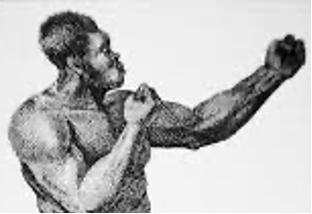
This behaviour was unusual, as such challenges typically occurred among peers. Hela took it lightly and attempted to walk away, but Sekuru persisted, taunting him and insisting on a fight. He claimed he wanted to show that Hela was nothing but a child who still had “milk on his nose.” Hela continued to walk away, reminding Sekuru that he was an elder and a relative, and that injuring him would leave Hela with a heavy burden the next day. However, Sekuru was undeterred. Others encouraged Hela to stand up to him and teach him a lesson since no one else could stop Sekuru.
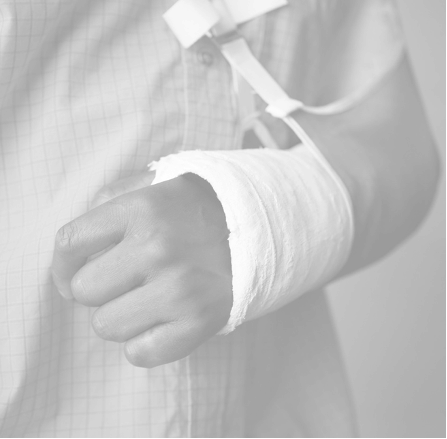
Reluctantly, Hela faced the old man as the ricket Sekuru who walked with a forward-leaning bend charged at him near a mutondo tree. Hela ducked a left hook, avoiding Sekuru’s follow-up right jab as well. The subsequent left roundhouse was also dodged and landed on the mutondo tree trunk breaking VaChivhaivhai’s hand instantly. Hela then left the scene while the villagers tended to Sekuru’s injury. They later arranged to take him to Chishave Clinic, where his hand was immobilized with plaster to aid in healing. However, this was not the end of their saga.
Two days later, Hela received a summons to Chief Masunda’s court. Chief Zvakavapano Masunda was known for his strictness, even administering corporal punishment for certain offenses. A summons to his court could result in heavy fines, sometimes costing several livestock. The Mudzimbaswsekwa family was also called to the court to support their member.
When it came time for Hela’s case, the charge was announced as “breaking Sekuru VaChivhaivhai’s hand.” The procedure required the complainant to present the charges and respond to questions before the respondent was allowed to speak. The Chief’s assistant called VaChivhaivhai to explain how Hela had allegedly broken his hand.
“Mambo wangu, Murambwi,” VaChivhaivhai addressed the court, clapping his left palm on his chest as his right hand was in plaster.
“I wanted to punch Hela while he was by the tree. Twice, he ducked my punches, resulting in my right hand hitting the tree trunk behind him. It is broken, as you can see, and it will take time before I can provide for my family as I used to. I ask you, Shumba Murambwi, to compel Hela to compensate me. If he hadn’t ducked, my fist wouldn’t have hit the tree and broken my hand.”
The usually calm atmosphere in Chief Masunda’s court erupted into laughter. Even the tough chief himself chuckled while contemplating the verdict. As the laughter died down, VaChivhaivhai continued.
“It was very cruel of Hela to duck my punches, especially since he knew I was an old man and was also drunk.” Another wave of laughter followed, and the court adjourned.
What might have been your verdict?
 PJMUFARA